AI for Solopreneurs: How to Run a One-Person Business That Feels Like aTeam
Published On
Updated On

Brian Moran
Founder

Samara Lemon
VP of Marketing

Leilani Treuting
Marketing Director

Scott Moran
Co-Founder

SamCart is the digital business platform that builds, runs, and scales your online business. AI handles the hard parts, so you keep more of what you earn.
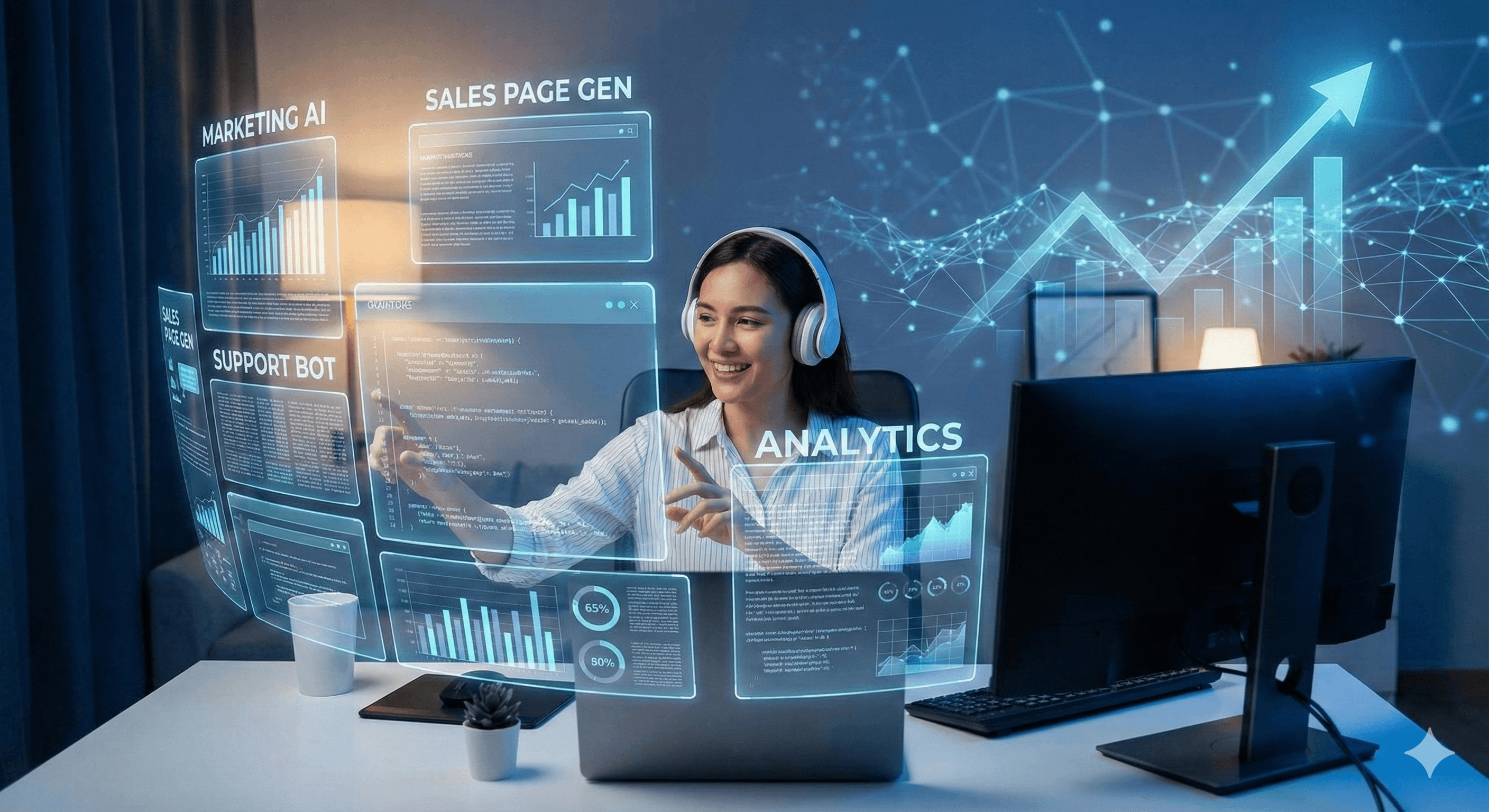
Table of Contents
Title
Share this article
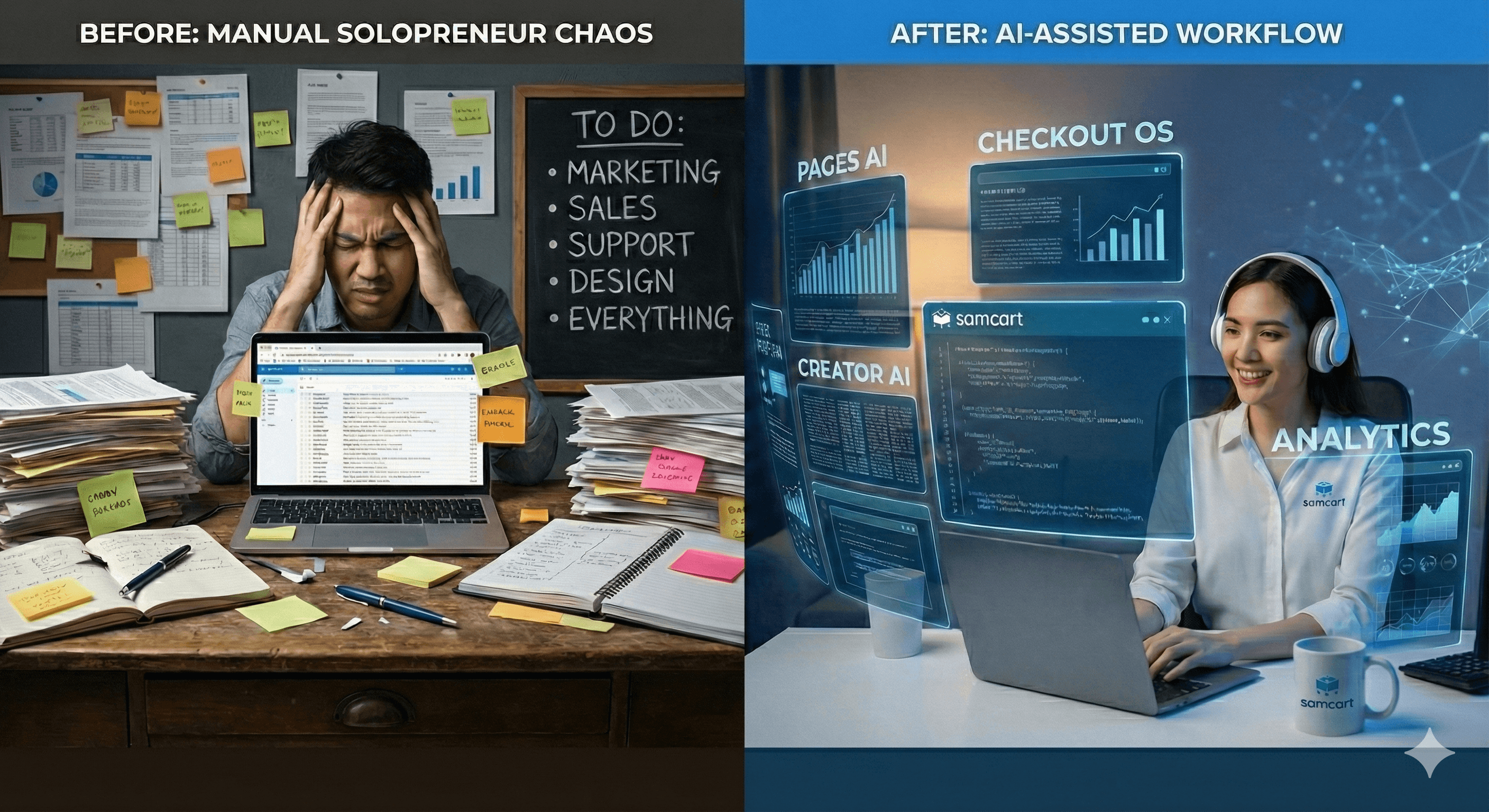
You’re doing the work of 5 people. Marketing. Sales. Customer support. Product development. Accounting. And somewhere between writing that sales page and answering the fourteenth email of the day, you wonder: is this actually sustainable?
The honest answer, for most solopreneurs, is no. Not like this. Not manually. But here’s what’s changed: you no longer have to choose between burning out or hiring a team you can’t afford. AI has gotten good enough—and specific enough—that a single person can now run an operation that genuinely competes with small teams.
This isn’t about ChatGPT writing your emails (though it can). It’s about strategic AI tools that handle the work that used to require specialists: designers, copywriters, conversion optimizers, and business strategists. The solopreneurs winning right now aren’t just working harder. They’re building smarter systems.
Why Solopreneurs Have the Biggest AI Advantage
Large companies move slowly. They need approval chains, committee meetings, and IT departments to implement new tools. You don’t. When a new AI capability drops that could save you ten hours a week, you can be using it by lunch.
This speed advantage compounds. While a marketing agency debates whether to adopt AI-powered page builders, you’ve already launched three sales pages and tested which one converts better. While a competitor’s design team revises mockups, you’ve generated and refined variations in an afternoon.
The math has fundamentally shifted. Tasks that once required either expensive freelancers or weeks of your own learning curve now take minutes. A sales page that might cost $2,000 from a professional copywriter and designer? You can create a strong first draft in under ten minutes with the right AI tools. That doesn’t mean AI replaces expertise entirely—but it gets you 80% of the way there, and you can refine the rest.
The solopreneurs who understand this are quietly building businesses that punch well above their weight class.
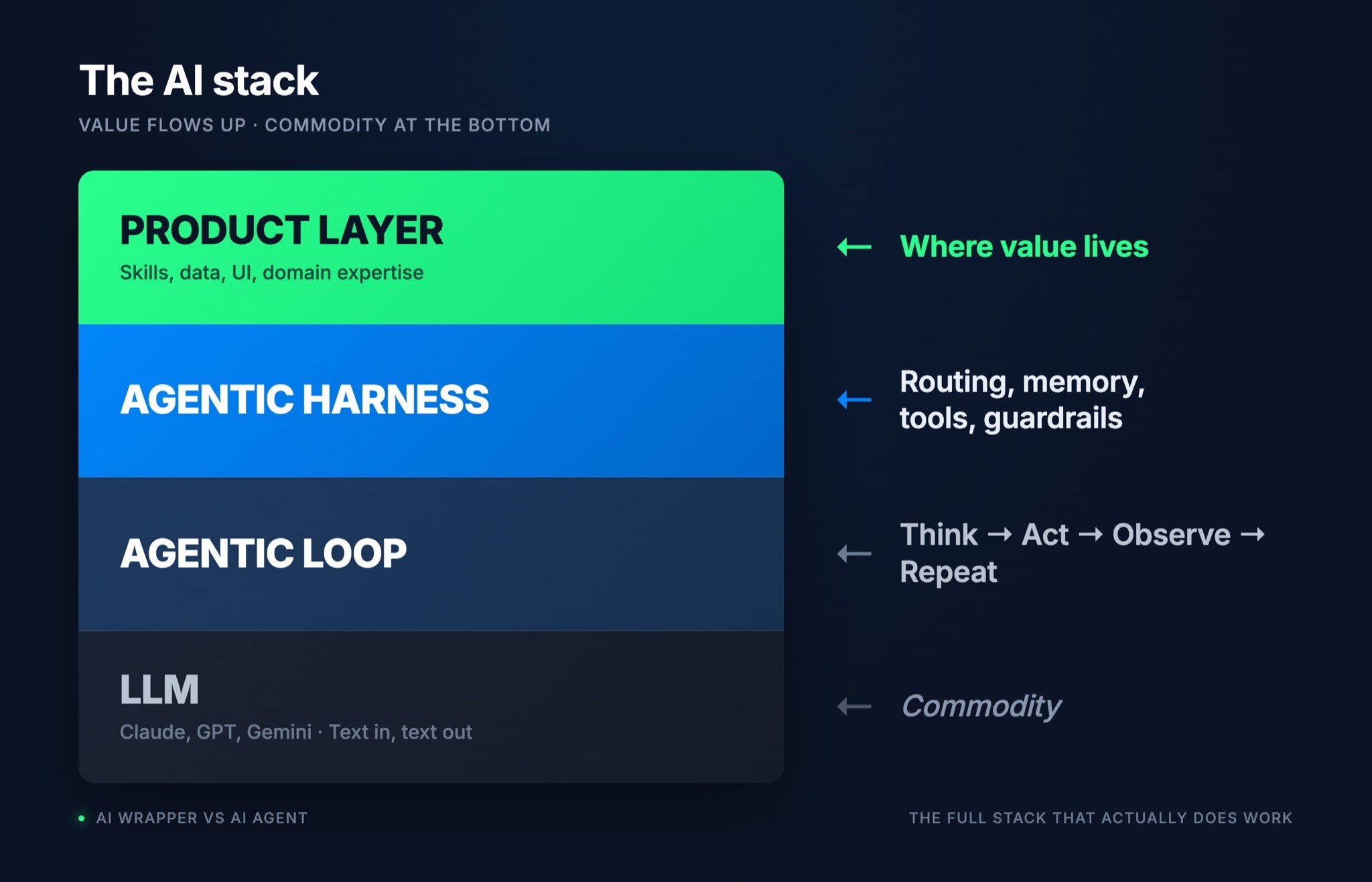
The AI Stack That Replaces a Team
Not all AI tools matter equally for running a business. Some are nice-to-haves. Others are force multipliers that directly impact revenue. Here’s where to focus.
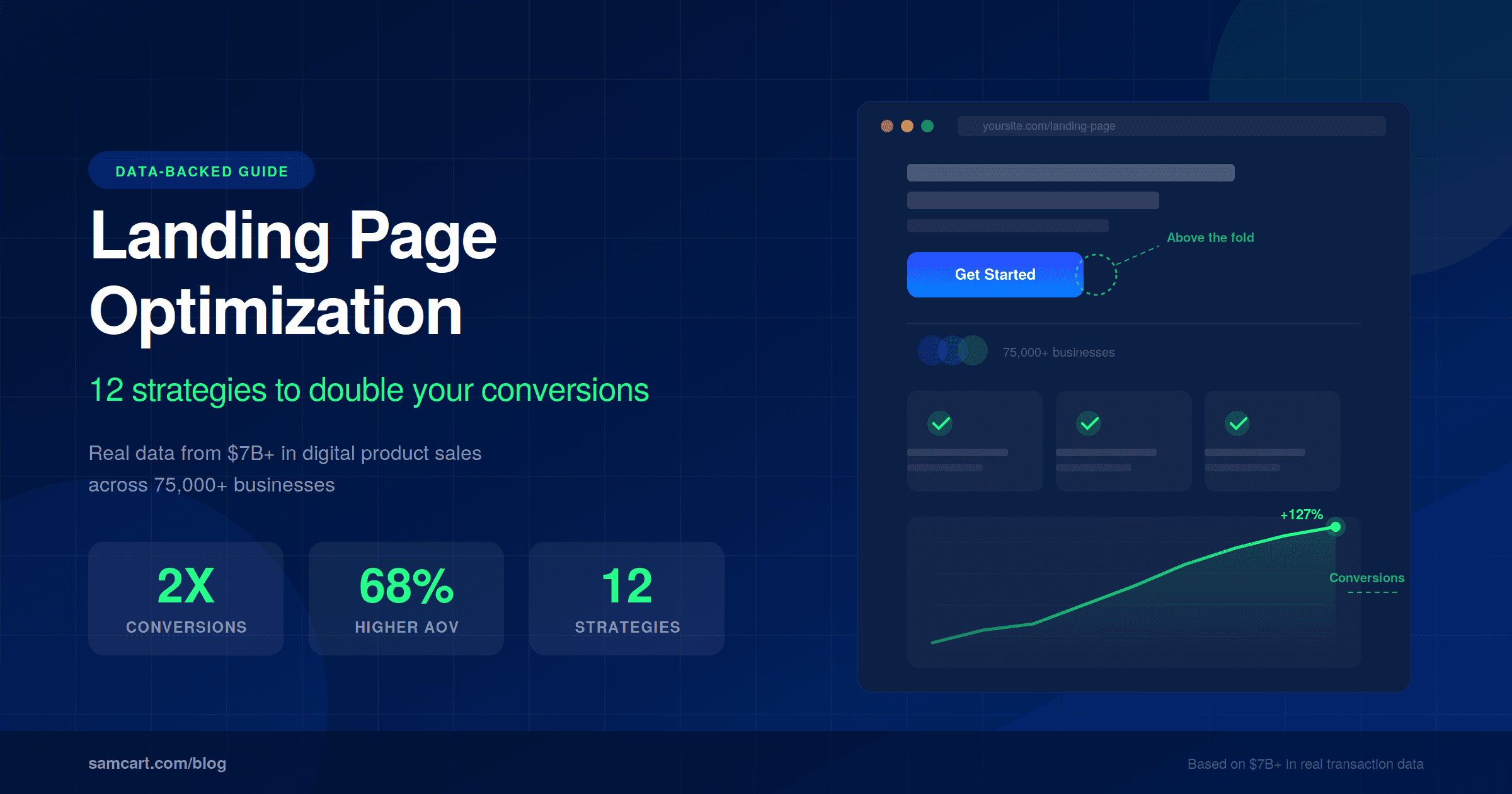
Sales Pages and Landing Pages
This is where most solopreneurs lose the most time—and where AI creates the biggest leverage. Writing a sales page used to mean staring at a blank document, researching competitor copy, outlining, drafting, revising, then figuring out design. The process easily ate a full week.
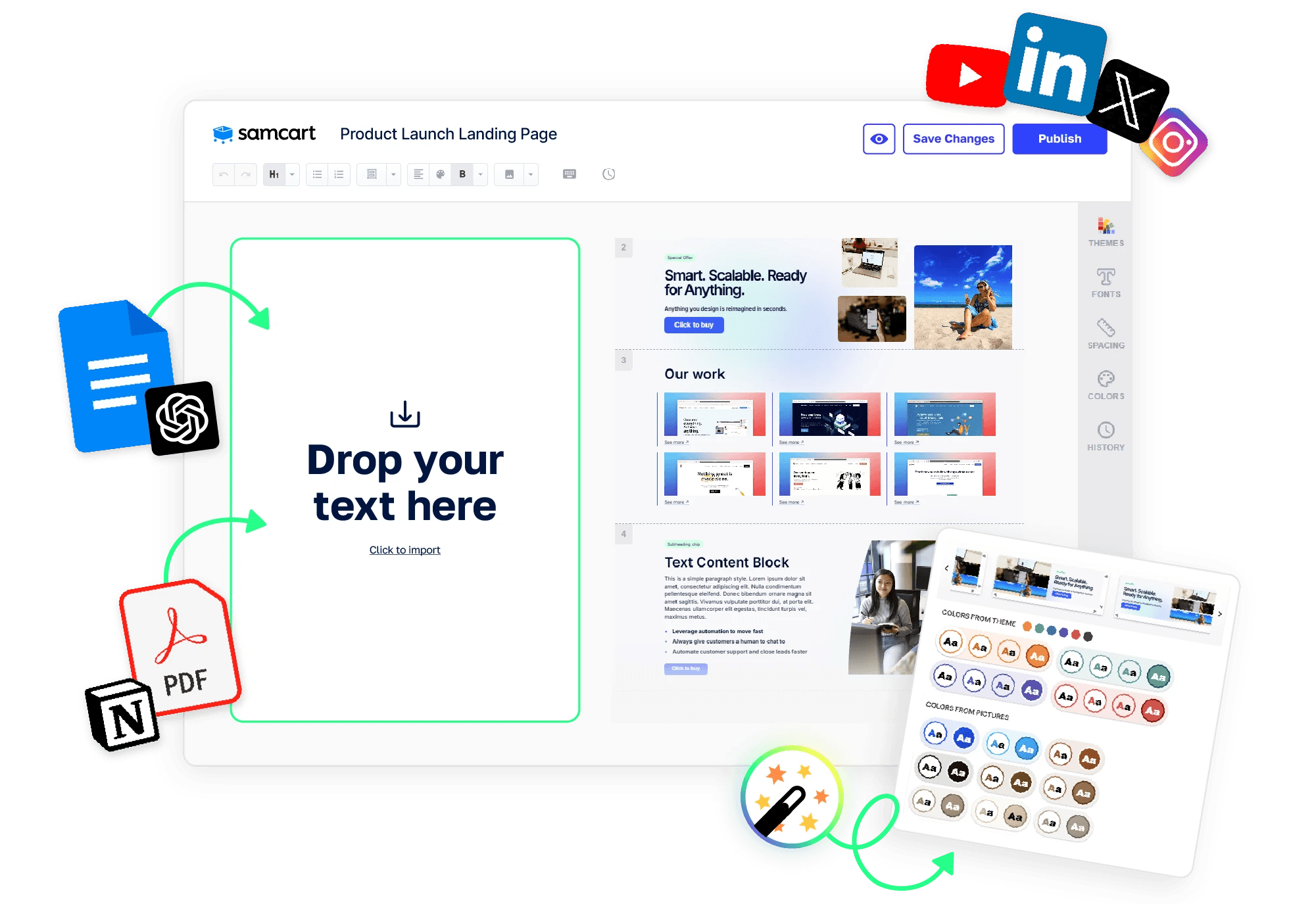
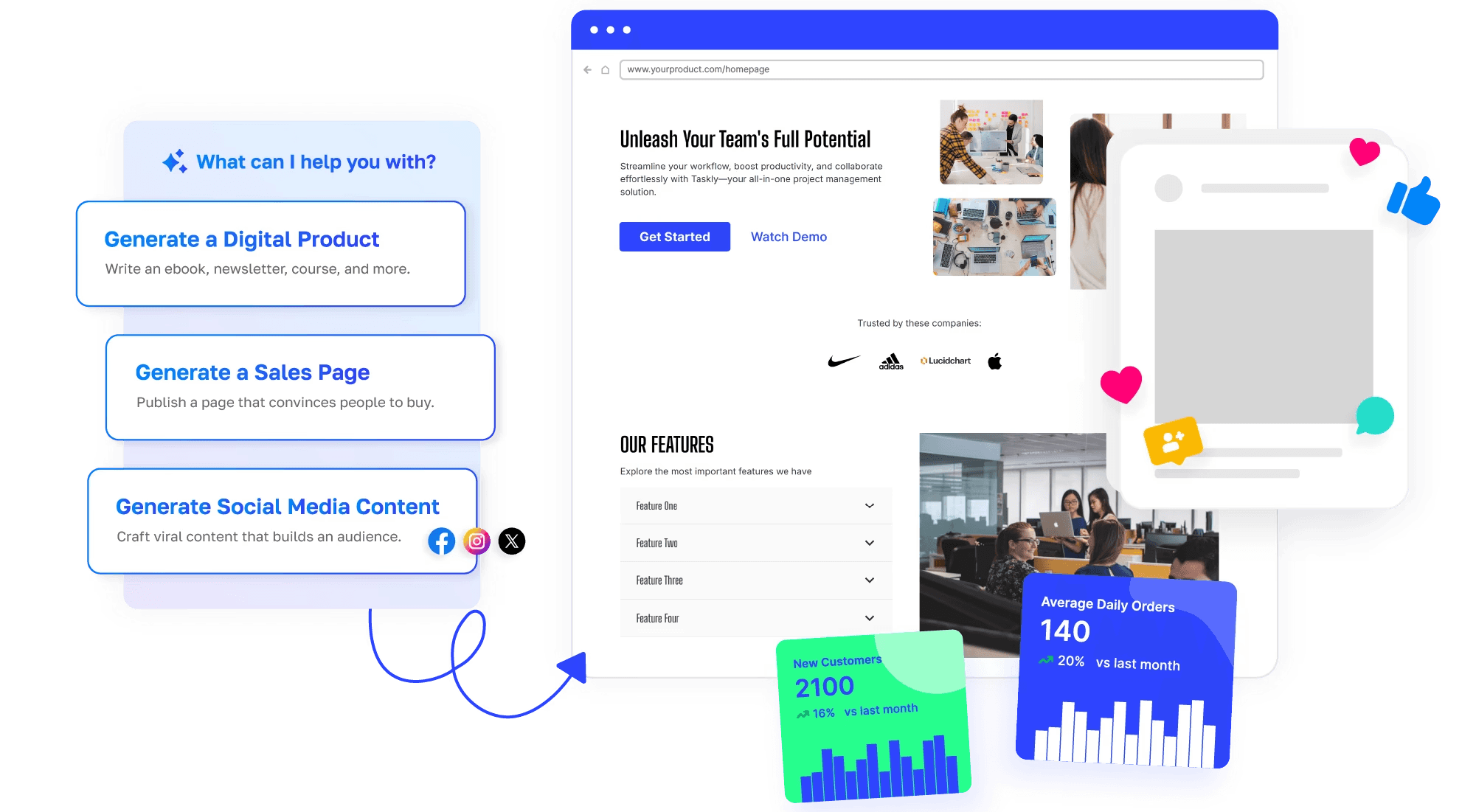
Modern AI page builders collapse that timeline dramatically. You describe what you’re selling, and the AI generates a complete page: headlines that hook, benefit sections that sell, testimonial layouts, and calls-to-action—all designed and written together.
SamCart’s Pages AI works this way. You tell it about your product or service, and it builds a high-converting page in minutes. The Magic Wand feature generates different layout variations, so you can test multiple approaches without starting from scratch each time. For solopreneurs who previously spent weeks on a single sales page (or avoided creating them entirely because the process felt overwhelming), this is transformative.
The key difference from generic AI tools: Pages AI understands conversion. It’s trained on patterns from over 100,000 successful sellers, so the pages it generates aren’t just pretty—they’re built to sell.
Copywriting and Messaging
Good copy sells. Bad copy gets ignored. And most solopreneurs aren’t trained copywriters—they’re experts in their actual craft who happen to also need to write sales copy, email sequences, ad headlines, and product descriptions.
AI handles this gap exceptionally well. Rather than spending hours crafting the perfect headline, you can generate dozens of variations in seconds and pick the strongest. Instead of agonizing over benefit statements, you describe what your product does and let AI articulate why that matters to customers.
Where this gets powerful is iteration. Traditional copywriting involved long feedback loops—write, wait, revise, wait, finalize. With AI, you can test multiple angles in the time it used to take to draft one. That velocity translates directly to better conversion rates because you’re not stuck with your first idea.
Checkout Optimization
Here’s something most solopreneurs don’t think about: the checkout page itself might be costing you 20-30% of your sales. Confusing layouts, too many form fields, missing trust signals, no mobile optimization—these friction points quietly kill conversions.
AI-powered checkout optimization analyzes what makes people complete purchases versus abandon their carts. CheckoutOS applies these insights automatically, so you’re not guessing at best practices or hiring a conversion rate optimization specialist.
The difference matters more than you might expect. Increasing checkout conversions from 2% to 3% doesn’t sound dramatic until you realize that’s a 50% revenue lift from the same traffic. For solopreneurs who can’t afford to waste a single visitor, this is where AI quietly prints money.
Business Strategy and Coaching
This might be the most underrated AI application for solopreneurs. When you work alone, you don’t have colleagues to bounce ideas off, no manager to point out blind spots, no advisor to suggest what you should try next.
AI business coaches fill this gap surprisingly well. They can analyze your specific situation—your products, your pricing, your customer base—and suggest strategic moves you might not have considered. Should you add an upsell to your checkout flow? What price point makes sense for your new product? How should you position against competitors?
SamCart’s CreatorAI Assistant works this way, drawing on best practices from 100,000+ successful sellers to give you personalized recommendations. It’s like having a business strategist on call, except you don’t need to schedule meetings or pay consulting fees.
How to Actually Implement AI Without Overwhelm
The biggest risk with AI tools isn’t that they don’t work—it’s that solopreneurs collect them like Pokemon cards without actually implementing them. You sign up for twelve different platforms, spend hours learning interfaces, then abandon most of them because the switching costs become too high.
A smarter approach: consolidate where possible.
Instead of using one tool for landing pages, another for checkout, another for course delivery, and another for customer management, look for platforms that handle multiple functions with AI built in throughout. This reduces tool sprawl, eliminates data silos, and means the AI actually understands your full business context.
When your page builder, checkout system, and customer data live in the same place, the AI can make smarter recommendations. It can see which products sell best together (suggesting upsells), which checkout flows convert highest (optimizing automatically), and which customers are most valuable (helping you focus retention efforts).
Start With the Bottleneck
Every solopreneur has one or two tasks that consume disproportionate time. For some, it’s creating sales content. For others, it’s managing customer inquiries. For many, it’s the cycle of building and rebuilding marketing assets.
Identify your biggest time sink first. That’s where AI will create the most immediate value. If you spend ten hours a week on sales page creation and revision, automating that with AI page builders frees up ten hours. If customer support emails eat your mornings, AI-assisted responses give you that time back.
The mistake is trying to AI-ify everything simultaneously. Start with one high-impact area, get it working smoothly, then expand.
The Human Element Still Matters
AI for solopreneurs isn’t about removing yourself from your business. It’s about elevating your role from task-execution to strategic direction.
The AI can write your sales page, but you still need to understand your customers well enough to tell it what matters to them. The AI can suggest upsells, but you need to know which products genuinely complement each other. The AI can generate email copy, but your authentic voice and story are what build real connection with your audience.
Think of AI as a highly capable junior employee. It can execute tasks quickly and competently, but it needs your direction, your quality checks, and your judgment calls. The solopreneur’s job shifts from doing everything to directing everything—which is a much more sustainable position.
What This Means for Your Business
The window of advantage is now. AI tools are good enough to create meaningful leverage, but adoption is still low enough that you can genuinely differentiate by using them well.
In three to five years, AI-assisted business operations will be table stakes. Everyone will have AI-generated sales pages and AI-optimized checkouts. The competitive advantage will disappear as the tools become ubiquitous.
But right now? The solopreneurs who build AI into their workflows are operating at a level that would have required a small team just two years ago. They’re launching faster, iterating more, and scaling without the overhead that usually comes with growth.
The question isn’t whether to use AI in your business. It’s whether you’ll be early enough to benefit from the head start.
Getting Started
If you’re building or scaling a digital product business—courses, coaching, downloads, memberships—the fastest path to AI-powered solopreneurship is an integrated platform that handles the full customer journey with AI built in.
SamCart combines AI page building, checkout optimization, upsell automation, course delivery, and customer management in one system. The Pages AI builds high-converting sales pages from simple prompts. The checkout is already optimized based on what works for 100,000+ creators. And the CreatorAI Assistant gives you strategic guidance whenever you need it.
You can start a free trial and see how AI changes the way you work. Most solopreneurs who try it say the same thing: they can’t imagine going back to building everything manually.
SamCart Editorial Team
Brian Moran
Founder
Samara Lemon
VP of Marketing
Leilani Treuting
Marketing Director
Scott Moran
Co-Founder