How to Sell Fitness Programs Online in 2026
Published On
Updated On

Brian Moran
Founder

Samara Lemon
VP of Marketing

Leilani Treuting
Marketing Director

Scott Moran
Co-Founder

SamCart is the digital business platform that builds, runs, and scales your online business. AI handles the hard parts, so you keep more of what you earn.
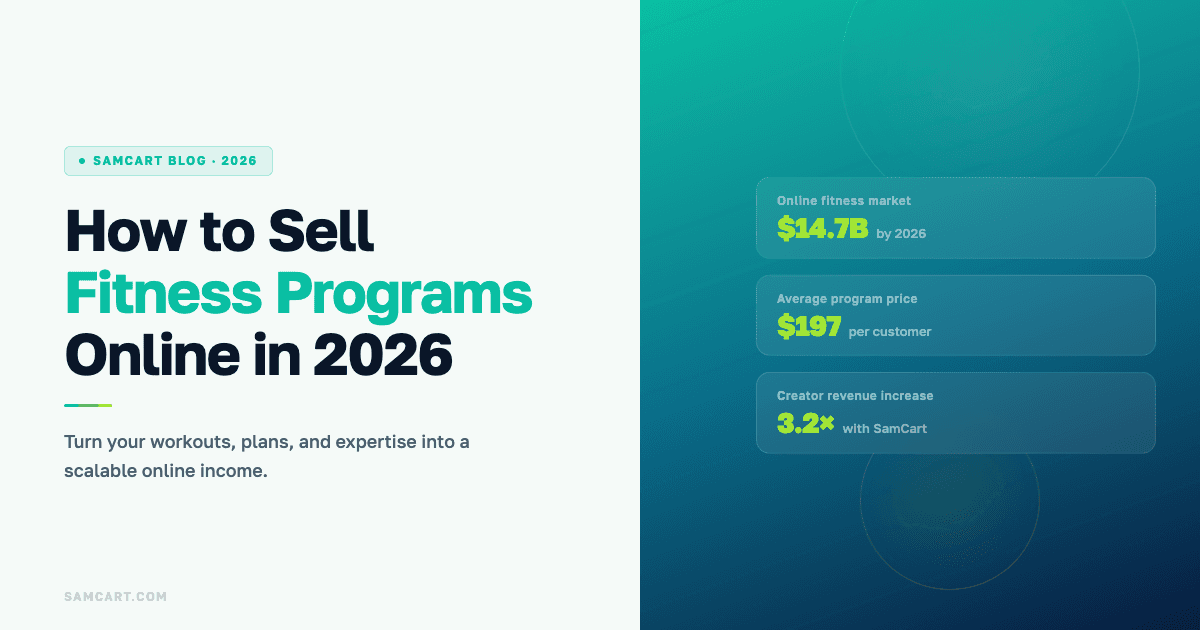
Table of Contents
Title
Share this article
To sell fitness programs online, you need three things: a specific niche, a program packaged as a transformation (not just a list of exercises), and a sales page built to convert visitors into buyers. The trainers who earn the most from digital fitness aren't the ones with the biggest followings — they're the ones who treat their programs like real products with pricing strategy, upsells, and recurring revenue built in.
Fitness is one of the top-performing niches across 75,000+ businesses on SamCart, with creators regularly building five-figure months from programs they built once. The difference between a trainer earning $200/month from a PDF and one earning $10,000+/month from the same expertise comes down to how they package, price, and sell — not how many reps they can demonstrate on camera.
Here's the math that makes this real. A personal training client pays you $100 per session, and you trade an hour of your time for every dollar. A digital fitness program priced at $97 and sold to 100 people brings in $9,700 — from work you did once. Add a $47 nutrition guide as an order bump and a $297 coaching upsell, and a single product launch can outpace months of in-person sessions.
This guide breaks down exactly how to sell fitness programs online in 2026, from choosing your niche to building a sales page to scaling into six figures with memberships and affiliate programs. Whether you're a personal trainer, yoga instructor, or CrossFit coach looking to go digital, these are strategies backed by real data from tens of thousands of digital businesses.
Why are fitness creators going digital?
The shift from gym floor to digital storefront started before 2020, but the pandemic proved the model works at scale. What's changed since then is the infrastructure. AI now handles the parts that used to take weeks — building sales pages, writing product descriptions, creating course outlines — so a trainer can go from idea to live product in an afternoon instead of a month.
The global online fitness market continues to grow, and the reason is simple: people want convenience, and trainers want freedom. Online programs let you serve clients in any time zone, on any schedule, without being physically present for every session.
But here's what most "how to sell fitness programs" guides miss — they focus entirely on the workout creation side and skip the business side. They'll tell you to film exercises and upload them somewhere. They won't tell you how to write a sales page that converts, how to price for maximum revenue, or how to use upsells and order bumps to double your average order value.
That's the gap. And it's exactly why fitness creators who focus on the business mechanics outperform those who just create great workouts.
5 types of fitness programs you can sell online
Not every fitness program needs to be a 12-week video course with Hollywood production value. The format you choose should match your audience, your skills, and how quickly you want to launch.
PDF and video workout plans are the simplest starting point. Price these between $27 and $97. They're fast to create and easy to deliver. A well-designed 8-week strength training plan or a 30-day mobility program can sell hundreds of copies with the right sales page. The downside: one-time revenue with no built-in retention.
Structured online fitness courses sit in the $197 to $497 range. These include video instruction, progressive programming, nutrition guidance, and often some form of accountability. Think "12-Week Body Recomp System" rather than "Workout Plan." The higher price reflects the structured transformation, not just the exercises.
Membership and subscription programs charge $29 to $99 per month and generate recurring revenue. This is where the real business stability comes from. New workouts each month, community access, live Q&A sessions, and progress tracking keep members subscribed. A membership with 200 members at $49/month is $9,800 in monthly recurring revenue.
Hybrid coaching programs combine a self-paced program with group or one-on-one coaching access. Priced between $197 and $997, these work well for trainers who want to charge premium prices while still serving more clients than pure one-on-one allows. You get the scalability of digital with the premium pricing of personal attention.
Fitness challenges are time-limited, community-driven programs priced between $47 and $197. A "21-Day Kettlebell Challenge" or "30-Day Yoga Reset" creates urgency and social proof as participants go through it together. Challenges work especially well as entry points that feed into a longer-term membership or course.
The smartest fitness creators start with one format, prove it works, then expand into a product suite — a challenge that feeds into a course that feeds into a membership.
How to package your fitness program (sell the transformation, not the exercises)
The single biggest mistake fitness creators make when going digital: they sell a list of exercises. Nobody pays $197 for a list of exercises they could find on YouTube for free.
What people pay for is a transformation. A clear starting point, a clear endpoint, and a structured path between the two.
Compare these two product names:
"Workout Plan for Women" — generic, sounds free, no urgency
"12-Week Body Recomp System for Busy Moms" — specific audience, clear timeline, defined outcome
The second one can charge 5x more because it solves a specific problem for a specific person.
When packaging your fitness program, go beyond workouts. Include nutrition guidance (even simple frameworks, not full meal plans), habit tracking, a community element, progress milestones, and mindset coaching. The workout is the vehicle. The transformation is the product.
Here's a packaging framework that works across niches:
The Core Program — your structured workout plan with progressive programming. This is the backbone.
The Nutrition Component — a simple eating framework, macro guidelines, or meal prep templates that complement the training. This is also your highest-converting order bump when sold separately.
The Accountability Layer — community access, check-in templates, progress photo protocols, or weekly group calls. This is what keeps people engaged and drives testimonials.
The Mindset Element — goal setting, habit stacking, dealing with plateaus. This separates a "workout plan" from a "complete system."
How do you sell a fitness program online? (7 steps)
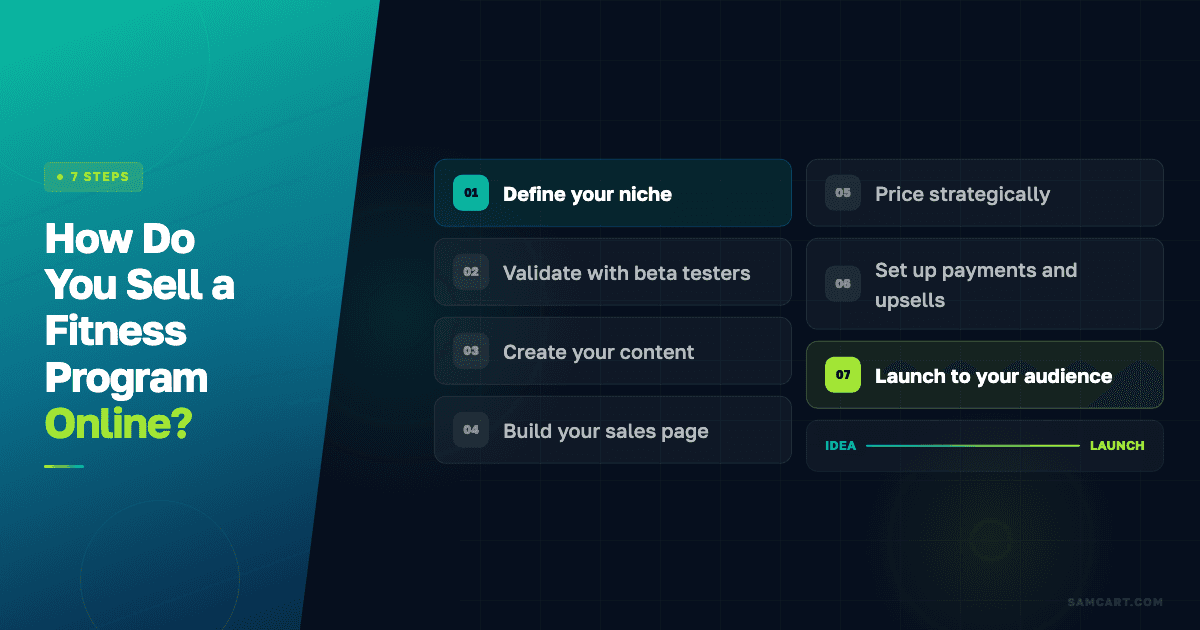
Step 1: Define your niche (and go narrow)
"General fitness" is not a niche. "Strength training for women over 40 who want to build muscle without spending hours in the gym" — that's a niche. The more specific your audience, the easier every other step becomes. Your sales page writes itself when you know exactly who you're talking to.
Pick a niche based on three things: your expertise, your personal story (people buy from trainers who've lived the transformation), and market demand.
Step 2: Validate with 5 to 10 beta testers
Before building a full program, get 5 to 10 people to go through a beta version. Offer it free or at a steep discount in exchange for honest feedback and a testimonial. This does two things: it proves your program gets results, and it gives you social proof before you officially launch.
Step 3: Create your program content
Video is better than PDF for engagement and perceived value. But start where you are. A well-structured PDF with clear instructions, progressions, and photos can sell well at the right price point. If you're filming video, you don't need a studio — a clean space, natural light, and a phone on a tripod is enough to start.
Focus on clarity over production quality. Can someone follow this program without you standing next to them? That's the bar.
Step 4: Build your sales page
Your sales page is where the sale happens. This is the most overlooked step for fitness creators — they'll spend weeks perfecting their programming and then throw up a basic landing page that doesn't convert.
A high-converting fitness program sales page needs: a headline that speaks to the transformation, social proof (testimonials, before-and-afters with permission), a clear breakdown of what's included, pricing with a value anchor, and a strong call to action.
SamCart's AI builds your sales page from your program description — you describe your program, and it generates a conversion-tested page layout with copy. For fitness creators who'd rather spend time coaching than designing web pages, this saves days of work.
Step 5: Price strategically
Don't price your digital fitness program like a gym membership. Price it like the transformation it delivers.
A gym membership costs $30 to $50/month and comes with zero guidance. Your structured 12-week program with nutrition coaching, accountability, and progressive programming? That's worth $197 to $497 — easily.
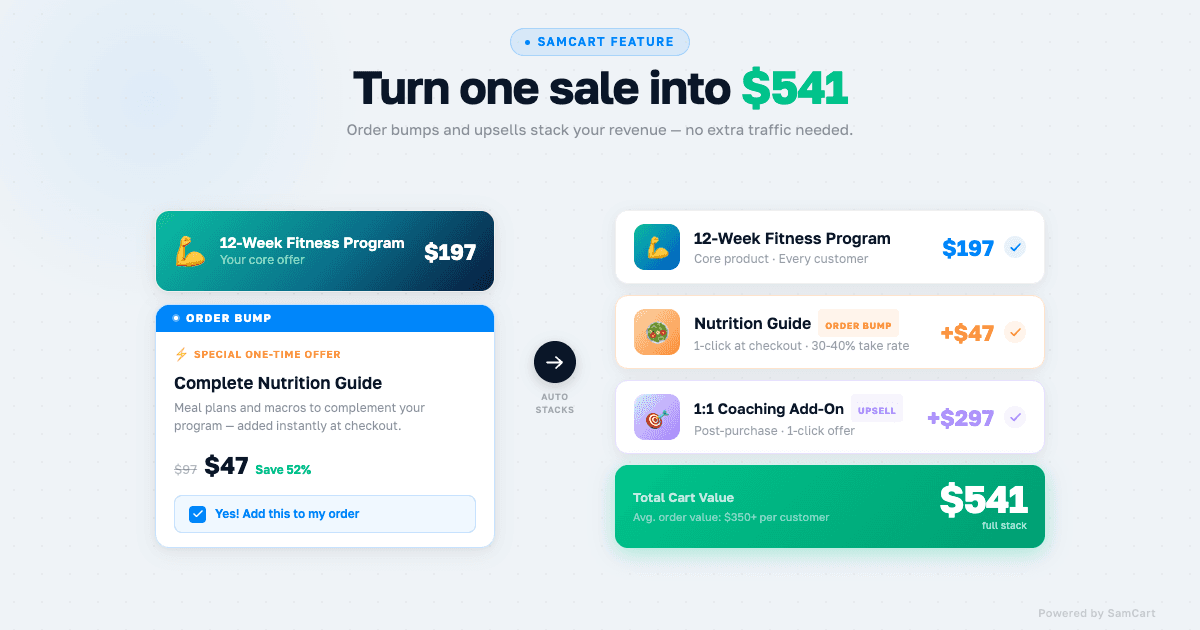
Fitness creators on SamCart consistently see higher average order values when they add upsells and order bumps. A nutrition guide order bump at $47 converts at 30 to 40% on fitness products. A one-click coaching upsell at $297 can boost your average order value by 68%. You're not just selling a program — you're building a revenue stack.
Step 6: Set up payments and upsells
Your checkout needs to do more than collect payment. It needs to increase your revenue per customer. Set up an order bump (a nutrition guide, supplement guide, or equipment checklist that adds to the cart with one click) and a post-purchase upsell (coaching access, a premium community, or an advanced program).
The difference between a $97 sale and a $244 sale is often one order bump and one upsell — same customer, same traffic, significantly more revenue. That's the business math that separates hobby sellers from real digital businesses.
Step 7: Launch to your audience
You don't need 100,000 followers to have a successful launch. You need an engaged audience of any size and a launch sequence that creates anticipation. Start with your existing clients, email list, and social media followers. Share transformation stories from your beta testers. Create a countdown. Offer an early-bird price.
A simple launch sequence: 7 days of pre-launch content (behind-the-scenes, testimonials, the problem your program solves), a 3-day open cart with a deadline, and follow-up emails for people who didn't buy.
What is the best platform to sell fitness programs?
Choosing the right platform matters because it directly affects your conversion rate, average order value, and how much time you spend on tech instead of coaching.
Here's how the major options compare for fitness creators:
Feature | SamCart | Trainerfu | FitPros | Wix | Kajabi |
|---|---|---|---|---|---|
AI-built sales pages | Yes | No | No | No | No |
One-click upsells | Yes | No | No | No | Yes |
Order bumps | Yes | No | No | No | Yes |
Yes | Limited | No | Add-on | Yes | |
Branded fitness app | No | Yes | No | No | No |
Conversion-optimized checkout | Yes | No | No | Basic | Basic |
Revenue-based pricing | $5-$49/mo | Free (marketplace cut) | $17-$159/mo | $149+/mo | |
Transaction data insights | $7B+ processed | Limited | Limited | None | Limited |
SamCart is built for selling digital products with maximum revenue per customer. AI builds your sales page and product from a description, one-click upsells and order bumps are built into every checkout, and membership features give you recurring revenue with built-in community for accountability. It's the only platform where the AI actually builds your product and your sales page, using conversion patterns from $7B+ in processed transactions.
Trainerfu gives you a branded app for delivering workouts, which is great for client experience. But it's weak on the sales and marketing side — no conversion-optimized checkout, no upsells, no AI sales pages. You'll need a separate tool to actually sell.
FitPros is a marketplace, which means you're building their brand, not yours. You get discovery traffic but lose control over pricing, customer relationships, and your brand.
Wix gives you a website builder and you assemble everything from scratch. No built-in upsells, no conversion optimization, no AI assistance. You're doing all the work.
Kajabi is a strong all-in-one platform but starts at $149/month and doesn't offer AI-powered page building. For fitness creators just starting out, that price point is hard to justify before you've made your first sale.
How to market your fitness program (without paid ads)
Most fitness creators already have the one thing most digital entrepreneurs struggle to build: an engaged audience. People follow fitness accounts because they want results. The gap isn't attention — it's converting that attention into sales.
Transformation content on Instagram and TikTok is the highest-performing organic content for fitness creators. Before-and-after posts (with client permission), workout demos with a "this is from my program" callout, and day-in-the-life content showing results all drive traffic to your sales page.
Free workout samples as lead magnets build your email list. Offer a free 7-day sample of your program in exchange for an email address, then nurture those subscribers with a 5-email sequence that leads to your paid program.
Email sequences are where quiet, consistent revenue comes from. A simple welcome sequence (5 emails over 10 days) that shares your story, delivers value, shows social proof, and makes an offer can convert 5 to 10% of subscribers into buyers.
Testimonials and client results are your most powerful sales tool. Make it easy for clients to share their progress. Feature their stories everywhere — your sales page, emails, social posts. Real results sell better than any ad.
Referral programs turn your best clients into ambassadors. Offer a commission or credit for every new customer they refer. SamCart's built-in affiliate center lets you set this up in minutes — your clients get a unique link, you track everything automatically, and they earn a percentage of every sale they drive.
How should you price an online fitness program?
Pricing is where most fitness creators leave the most money on the table. They think in "gym membership" terms — $30 to $50/month — instead of pricing based on the value of the transformation they deliver.
Here's a data-backed pricing framework:
Entry-level digital products ($27 to $97): PDF workout plans, single challenge programs, or basic video libraries. These work as front-end offers that get customers into your ecosystem.
Mid-tier programs ($197 to $497): Structured multi-week courses with video instruction, nutrition guidance, and community access. This is where most of the revenue happens for fitness creators.
Premium and hybrid coaching ($497 to $997+): Programs that include group coaching calls, personalized feedback, or one-on-one check-ins layered on top of a self-paced program.
Memberships ($29 to $99/month): Recurring access to new programming, community, and ongoing coaching. Two hundred members at $49/month is nearly $120,000 per year in recurring revenue.
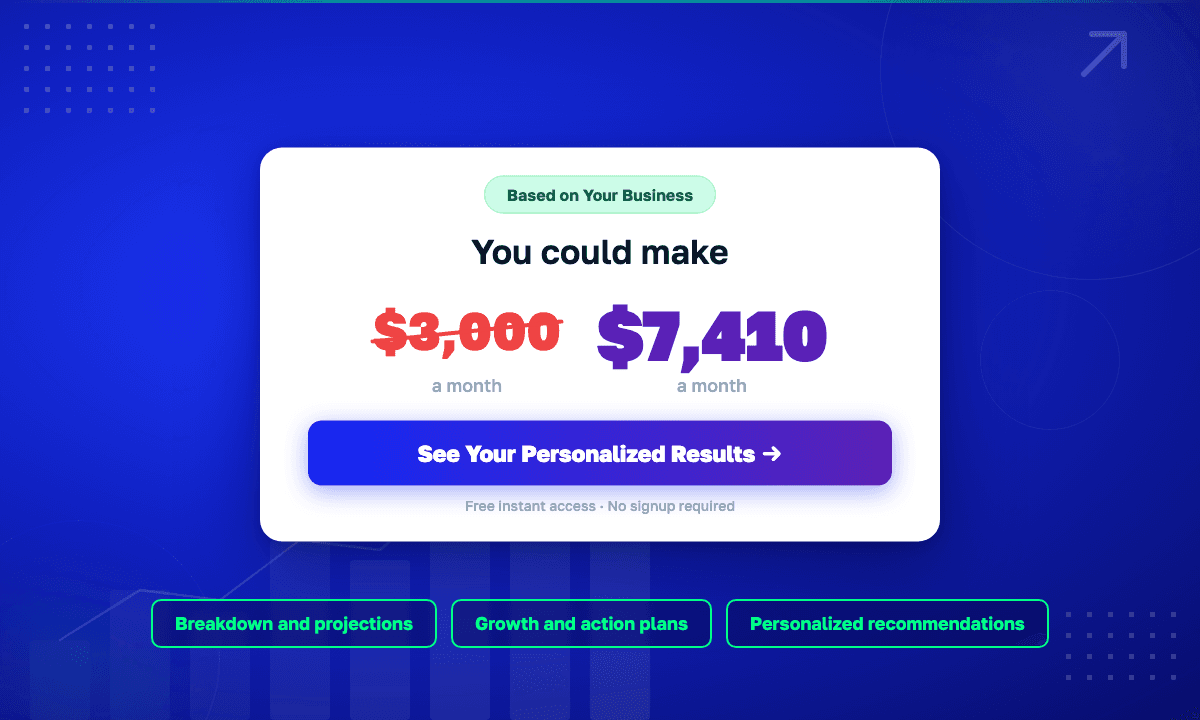
The real revenue multiplier is what happens at checkout. One-click upsells boost average order value by 68% across digital products on SamCart. Order bumps — a nutrition guide, supplement guide, or bonus training module added with a single checkbox — convert at 30 to 40% on fitness products. A $197 program with a $47 order bump and a $297 upsell turns a single customer into a $350+ transaction. Calculate your fitness program revenue to see what this looks like with your numbers.
How to scale beyond your first fitness program
One program is a product. A product suite is a business.
Once your first program is selling consistently, the natural next step is building a product ladder that meets your audience at every stage of their fitness journey:
Beginner program → Intermediate program → Advanced program → Monthly membership → Premium coaching
Each product serves a different customer or the same customer at a different stage. Your challenge or low-ticket PDF is the entry point. Your course is the core offer. Your membership is the recurring revenue engine. And your coaching program is the premium tier for people who want personal attention.
Add an affiliate program so your best clients become paid ambassadors. A 30% commission for two years gives clients a real incentive to share your programs with their networks. Your happiest customers are your best salespeople.
Selling fitness programs online is one of the fastest-growing opportunities in the creator economy — and fitness is one of the top-performing niches on SamCart across 75,000+ businesses. Ready to turn your training expertise into a digital business? Start your free trial and let AI build your first sales page in minutes.
SamCart Editorial Team
Brian Moran
Founder
Samara Lemon
VP of Marketing
Leilani Treuting
Marketing Director
Scott Moran
Co-Founder
Frequently Asked Questions
Frequently asked questions
Do I need a certification to sell fitness programs online?
No certification is legally required to sell general fitness programs online in most countries. However, having a recognized certification (NASM, ACE, ISSA, or similar) builds credibility and trust with potential buyers. If you're providing nutrition advice beyond general wellness guidelines, check your local regulations — some jurisdictions require credentials for specific dietary guidance.
What equipment do I need to film a fitness program?
You can start with a smartphone, a tripod, and natural lighting. Clean audio matters more than 4K video — a $30 lavalier microphone makes a bigger difference than an expensive camera. Film in a clean, uncluttered space. Many successful fitness creators film in their garage, living room, or a corner of their gym. Upgrade your equipment after your first program generates revenue, not before.
Should I use a marketplace or my own platform to sell?
Your own platform gives you control over pricing, customer data, branding, and upsells. Marketplaces (like FitPros or Udemy) give you some discovery traffic, but you're building their brand and handing over a cut of every sale. For long-term business growth, sell on your own platform and drive your own traffic.
How do I handle liability for an online fitness program?
Include clear disclaimers that your program is for educational purposes, recommend participants consult a healthcare provider before starting, and carry professional liability insurance. Most fitness creator insurance policies cost $200 to $400 per year and cover digital product delivery. Consult a legal professional for advice specific to your situation.
Can I sell a fitness program if I only have a small following?
Yes. You don't need a massive audience to sell a fitness program. A focused email list of 500 engaged subscribers can generate more sales than 50,000 passive Instagram followers. Start with your existing network — current and past clients, gym friends, people who've asked you for advice. Validate your offer with a small group, get testimonials, and grow from there.